
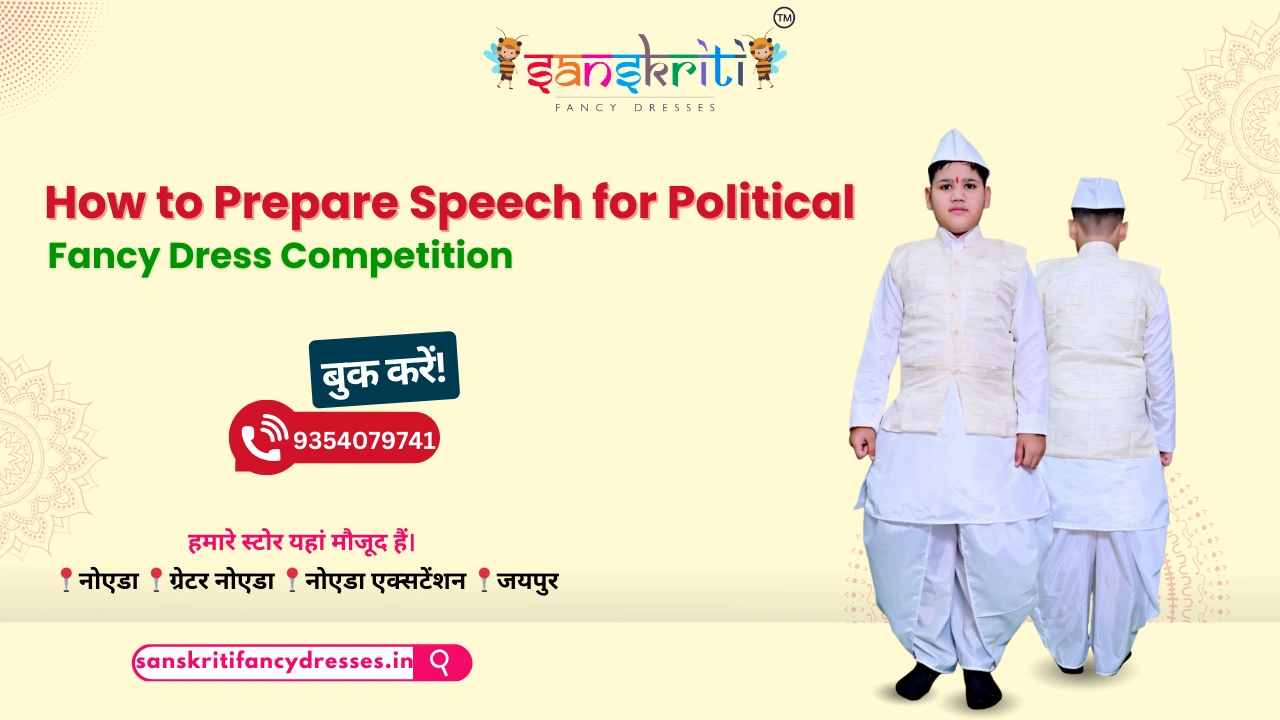
How to Prepare a Speech for a Political Fancy Dress Competition is something many parents and teachers look for when a child is selected to represent a leader on stage. While a great outfit from Sanskriti Fancy Dresses gets your child noticed the moment they step onto the stage, it’s the speech that leaves the judges and the audience in awe.
This blog is written to help parents, teachers, and students understand how to prepare a simple, clear speech that suits a political fancy dress competition. It focuses on age-appropriate language, short and meaningful content, and easy preparation so the child feels confident and comfortable on stage rather than nervous or confused.

Why the Speech is as Important as the Costume
We’ve all seen it, a child walks out in a stunning, high-quality costume but stands silent or mumbles. On the other hand, a child who speaks with confidence, even with a simple outfit, instantly becomes the frontrunner.
In a political fancy dress competition, the speech is what brings the character to life. A good speech shows that the child understands the leader’s values, courage, and personality. It helps them connect with the audience and, more importantly, gives the judges a reason to give them those extra marks for “overall performance.”
Understanding Your Character: Researching the Leader’s Voice
Before you write a single word, spend ten minutes talking to your child about the person they are portraying.
- Was the leader gentle or fiery? (Think Mahatma Gandhi vs. Subhash Chandra Bose).
- What was their main goal? (Independence, education, unity, or peace?)
How did they stand? If your child understands that Rani Laxmi Bai was a brave protector, their voice will naturally sound stronger. If they know Mother Teresa was about kindness, their tone will be softer. Researching the “voice” ensures the speech doesn’t just sound like words being read, it sounds like a leader speaking.
Top 10 Famous Political Slogans and Their Meanings
If you are stuck on what “The Heart” of your speech should be, here are the classics:
- “Satyameva Jayate” (Truth alone triumphs) – The National Motto.
- “Jai Jawan, Jai Kisan” (Hail the Soldier, Hail the Farmer) – Lal Bahadur Shastri.
- “Inquilab Zindabad” (Long live the revolution) – Bhagat Singh.
- “Swaraj is my birthright, and I shall have it!” – Bal Gangadhar Tilak.
- “Dilli Chalo” (Onward to Delhi) – Netaji Subhash Chandra Bose.
- “Do or Die” (Karo ya Maro) – Mahatma Gandhi.
- “Garibi Hatao” (Abolish Poverty) – Indira Gandhi.
- “Aaram Haram Hai” (Casting off laziness) – Jawaharlal Nehru.
- “Unity in Diversity” – Describing the Indian spirit.
- “Vande Mataram” (I bow to thee, Mother) – Bankim Chandra Chatterjee.
Voice Modulation: How to Speak with Authority and Clarity
A common mistake kids make is shouting. Shouting isn’t “authority”, clarity is:
- Slow Down: Nerves make kids talk fast. Practice the “Three-Second Rule”: count to three in your head before starting the speech and between sentences.
- Emphasis: Highlight the important words. In the slogan “Jai Jawan, Jai Kisan,” the words “Jawan” and “Kisan” should be spoken with more energy.
- Pause for Effect: After a big slogan, tell your child to wait for two seconds. It lets the message sink in and gives the audience a chance to clap.
Overcoming Stage Fear: Tips for Shy Children
If your child is terrified of the stage, don’t worry, most leaders were shy once too.
- The “One Friend” Rule: Tell them to find one familiar face (like Mom or Dad) in the crowd and speak just to them.
- Focus on the Costume: Remind them that they aren’t “Rahul” or “Ananya” today; they are Rani Laxmi Bai. Wearing a great outfit from Sanskriti acts like armor, it helps them hide their shyness behind the character.
- Positive Reinforcement: Even if they forget a line during practice, celebrate the part they got right. Confidence is built on small wins.
The “Namaste” and “Jai Hind” Technique: Perfecting the Greeting
- The “Bookends” of a speech are the greeting and the exit. If these are strong, the middle part feels much better.
- The Namaste: It should be slow and respectful. Hands should be at chest level, and a small bow of the head makes a huge impact on the judges.
- The Jai Hind: This should be the loudest and most energetic part of the performance. It’s the “final impression.” Practice saying it with a salute or a raised hand.
Using Props as Visual Aids During the Speech
Props aren’t just for decoration; they are tools to help the speech.
- The Spectacles: A child playing Dr. Ambedkar can adjust their glasses when making a serious point about the Constitution.
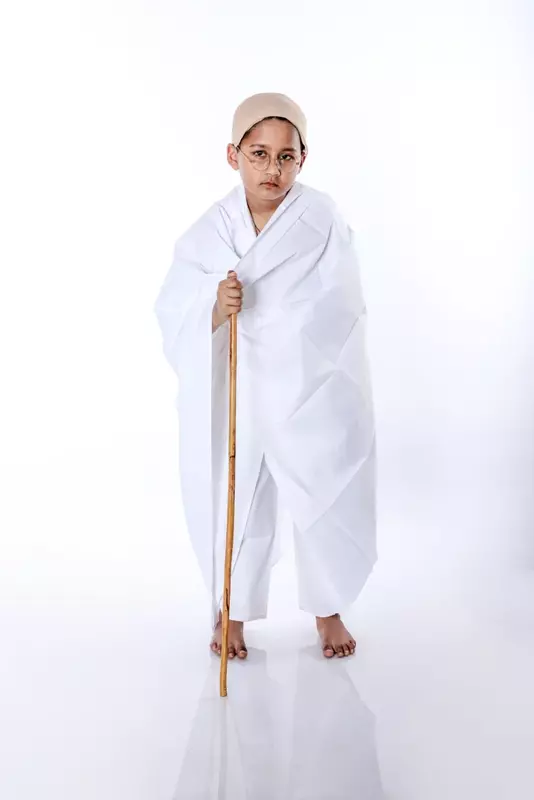
- The Stick: A child playing Mahatma Gandhi can tap the stick on the floor to keep a rhythm while walking.
- The Microphone: Even a toy mic helps a “Modern Neta” feel more official and encourages them to speak louder.
Speech Templates for Iconic Leaders
Here are four “plug-and-play” scripts. You can adjust the length based on your child’s age.
Mahatma Gandhi: A Message of Peace
- (Action: Walk in slowly with a stick, fold hands in Namaste) “Namaste! I am Mohandas Karamchand Gandhi. My message to the world is simple: Truth and Non-violence. I believe that an eye for an eye will only make the whole world blind. Let us be the change we wish to see in the world. Jai Hind!”
Subhash Chandra Bose: A Call for Courage
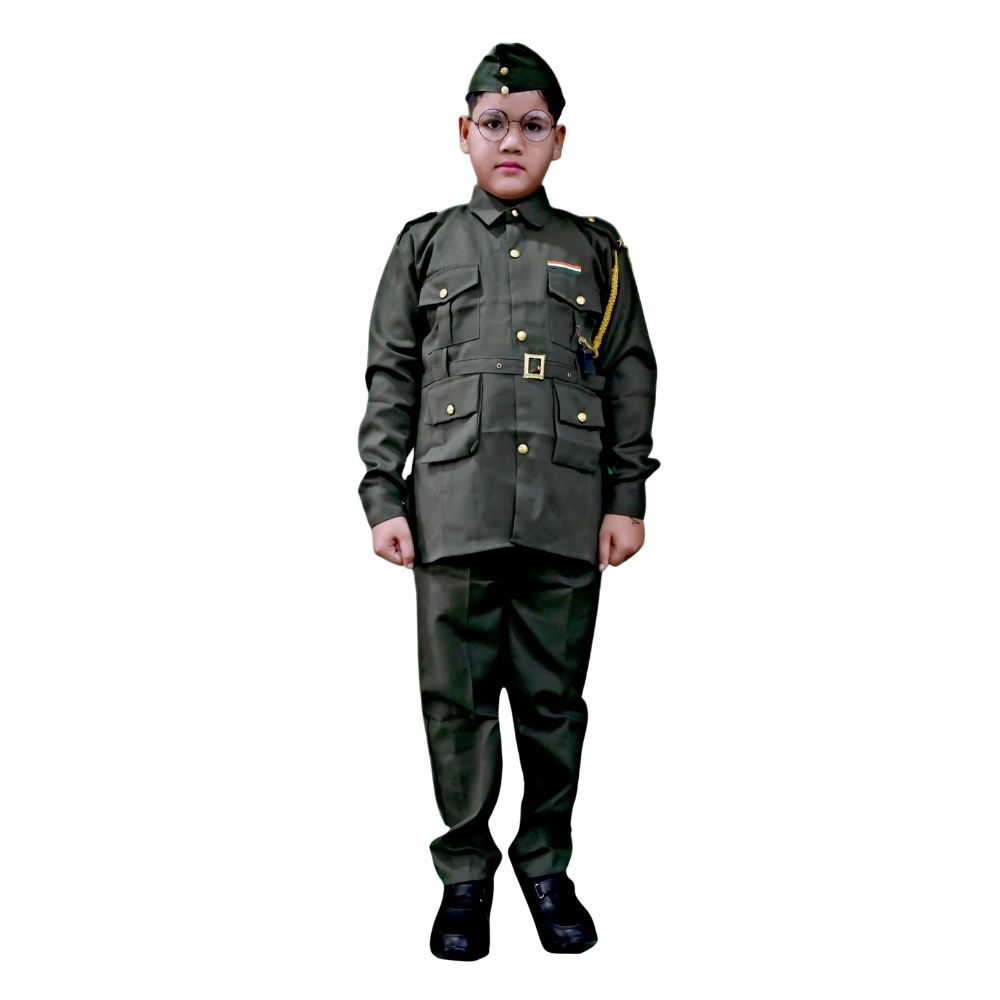
- (Action: March in briskly, stand tall, and salute) “I am Netaji Subhash Chandra Bose! Our nation is calling for freedom. Freedom is not given; it is taken! My message to my brave soldiers is: ‘Give me blood, and I shall give you freedom!’ Dilli Chalo! Inquilab Zindabad!”
Indira Gandhi: The Voice of Strength
- (Action: Walk with confidence, keep a slight smile, hands folded) “I am Indira Gandhi, the first woman Prime Minister of India. To me, service to the nation is the greatest religion. I do not mind if my life is spent in the service of the people. Every drop of my blood will contribute to the growth of this nation. Jai Hind!”
Dr. B.R. Ambedkar: The Architect of Equality
- (Action: Hold a book titled ‘Constitution of India’, wear round glasses) “I am Dr. B.R. Ambedkar. I believe in a society where everyone is equal. Education is the weapon that can change the world. My message to you all is: Educate, Agitate, and Organize! Long live the Constitution of India!”
Common Mistakes to Avoid During a Fancy Dress Speech
- Rushing the Exit: Many kids say their last word and bolt off stage. Tell them to stay for 3 seconds, smile, and then walk off.
- Holding the Mic too Close: If using a real mic, it shouldn’t touch their lips; keep it a few inches away so the sound is clear, not muffled.
- Looking at the Floor: This makes the child look unprepared. Even if they are nervous, looking at the back wall is better than looking at their shoes.
Judging Criteria: What are the Teachers Actually Looking For?
Teachers and judges usually have a score sheet that looks something like this:
| Criteria | What it means |
|---|---|
| Costume Authenticity | Does the child look like the character? (This is where Sanskriti Fancy Dresses helps!) |
| Clarity of Speech | Can the audience hear and understand the words? |
| Confidence | Does the child look comfortable and “in character”? |
| Impact | Did the speech or slogan leave a lasting impression? |
Booking Your Leader Look: Rent or Buy from Sanskriti Fancy Dresses
At Sanskriti Fancy Dresses, we make sure the costume is the least of your worries.
- Rent: Perfect for one-day school events. Get a premium, dry-cleaned look starting at Rs. 199.
- Buy: Ideal if you want to reuse the outfit for Republic Day, Independence Day, or family plays.
Frequently Ask Questions
How long should a fancy dress speech be for 5-year-old?
For toddlers and nursery kids, speech should be 10 to 15 seconds long. At this age level judges want to see cuteness and confidence, rather than a long script. A simple introduction, followed by a famous slogan (i.e. “Jai Hind”) is all that is needed.
Should the speech be in Hindi or English?
It really depends on the comfort level of the child. In general, however, most of the time a mixture of both languages works best for Indian political leaders. For example, when you introduce the character in English, deliver the iconic slogan in Hindi for the sake of maintaining historical authenticity.
What happens if my child forgets his lines while on stage?
Teach him the «Smile & Salute» rule. If he draws a blank while on stage, encourage him to simply smile at the judges, give them a strong salute or «Namaste,» and say «Jai Hind» before leaving. Staying true to the character is far more important than being perfect on the lines.
How can I make my child’s voice sound "powerful" like a leader?
The secret isn’t shouting; it’s pausing. Teach your child to take a deep breath and count to two after every sentence. This prevents rushing and makes their voice sound much more authoritative and clear to the audience.
How many times should we practice before the event?
Aim for 3 to 5 short sessions a day for a week. Practicing in front of a mirror is highly effective. Avoid over-practicing on the actual day of the event, as it might exhaust the child or make them anxious.
Can I carry a "cheat sheet" or a prop with lines written on it?
Reading from a paper is usually discouraged by judges. However, you can creatively hide bullet points. For a “Modern Politician” look, the child can carry a “Manifesto” folder with a few keywords written inside to help them remember the flow.

 Start Chat