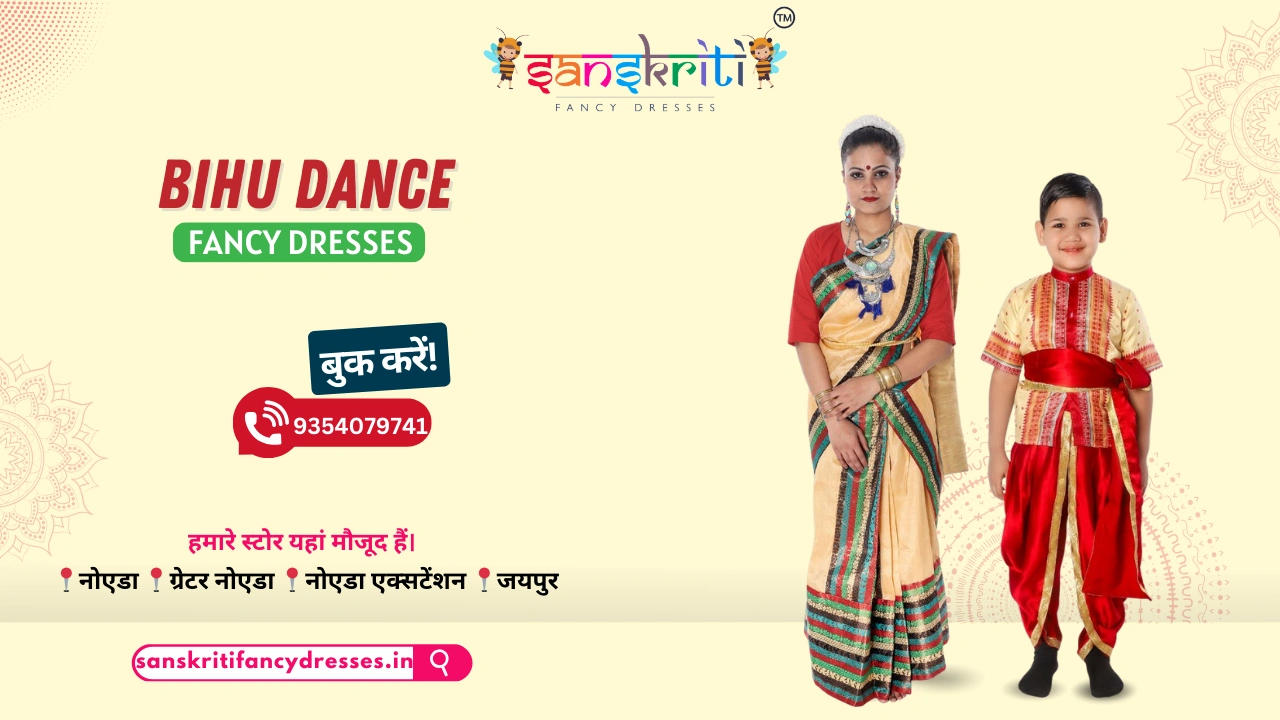
Bihu Dance is a very important part of Assam’s Bihu Festival celebrating the Assamese New Year and the arrival of spring. Dressing girls in traditional Bihu dress gives them a chance to engage with Assam’s culture, music, dance, and folklife. The costume is visually stunning, featuring Mekhela Chador or Chadar-skirt combinations that are colorful, elegant, and comfortable, allowing girls to feel comfortable and confident participating in their dance performances and/or at their schools’ cultural programs.
Performing Bihu dance is an enjoyable way for children to learn about Assam’s traditions and folk art with a community vibe. Wearing the proper costume not only helps the performance provide an authentic representation of Bihu, but also provides children with a sense of pride when participating in the cultural heritage of Bihu. Schools and families often select these costumes in order to add truth to their presentations in cultural programs, competitions, or on festive days while never forgetting to look beautiful, empowered young girls nevertheless.
Cultural Significance Of The Bihu Dance
Bihu dance is more than a dance performance, it is a celebration of fertility, harvest, and new beginnings in Assam. Girls performing Bihu dance experience beautiful rhythm, coordination of movement, the energy of spring, joy and gratitude, and spontaneous and expressive movements. The Bihu Dance Costume for Girls you choose plays a pivotal role in creating these experiences for girls.
Traditional Mekhela Chador For Girls
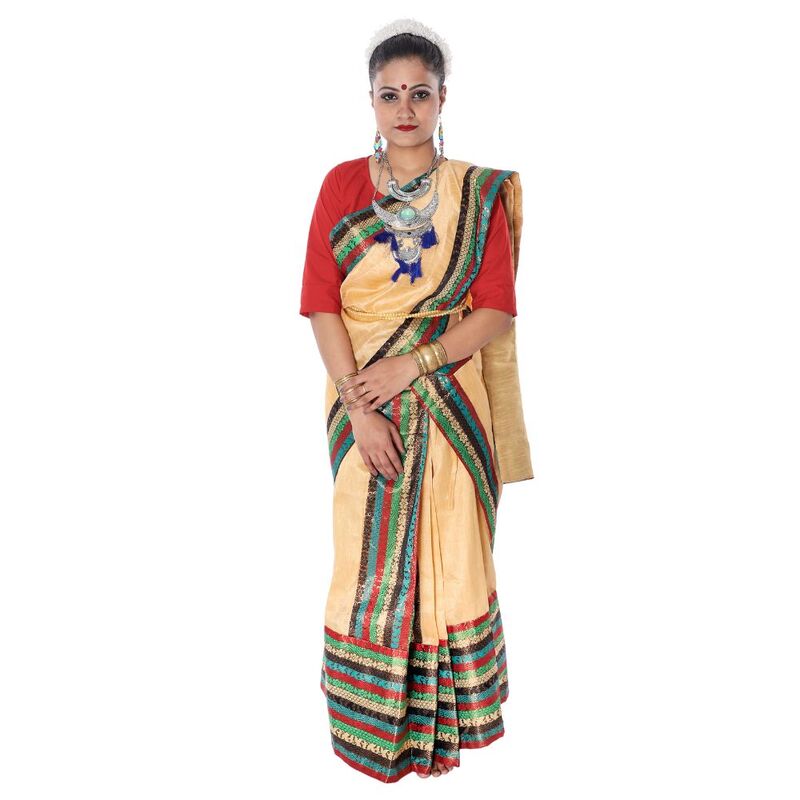
- Mekhela Chador is the traditional Bihu outfit and costume that young girls wear. Traditionally made from silk fabric, cotton fabric or handloom fabric from Assam, a Mekhela Chador is composed of two main components – the lower skirt (Mekhela) and an upper cloth (Chador) that is draped over the skirt. The design of the dress makes use of boundaries, colourful designs, and motifs along with elements of Assamese culture.
- The costume provides the ability for girls to be free body movement, and perform Bihu dance steps that involve moving the arms and hands, as well as the feet. Comfortable fabrics, help to enhance the experience for children who are comfortable wearing the ornaments, ensuring that long rehearsals or performances can take place without unnessary irritation. Adding ornament type jewelry, and very little hair accessoires are features of the special kids costume. The Mekhela Chador looks amazing, and it rivals any popular girls Bihu outfits in style and culture.
Chadar/Blouse,And Skirt Combination
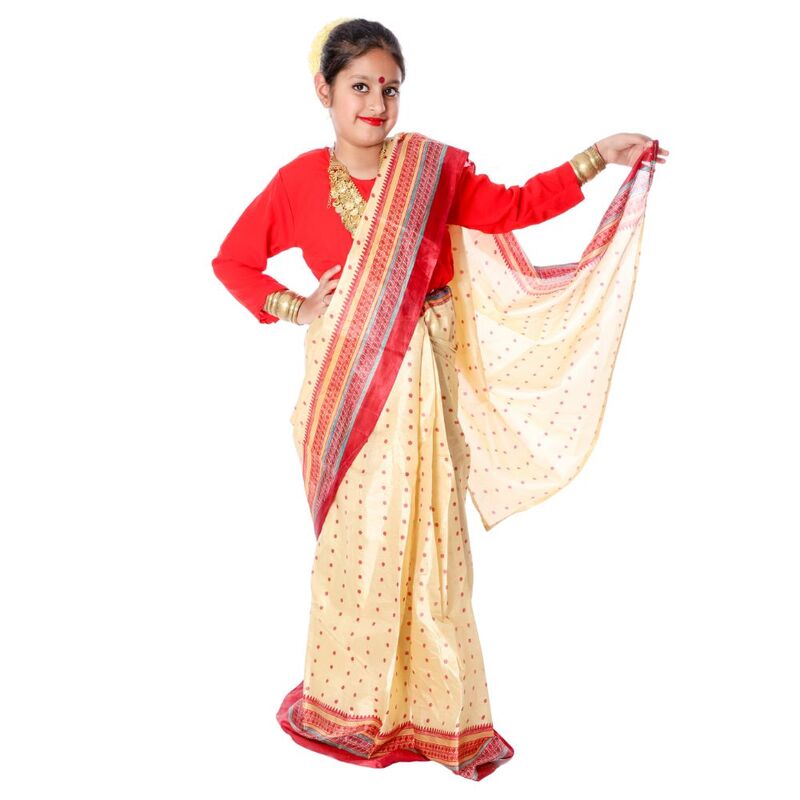
- Another usual option for Bihu Dance Costume for Girls is the Chadar with a Chadar/Blouse and skirt combination. This is usually a good option for a younger girl or beginner who needs to keep it simple while doing Bihu performance..
- The colors, usually bright, such as red, green, yellow, and orange, match spring and the time of harvest.
- Parents also like this option for their child’s Bihu dances, and adore how simple it is to put on, wear, and keep clean. All costs aside, lightweight and breathable materials allow the girls to be active in rehearsals, as well as on stage. Typically this option can be reused across other cultural activities; therefore, a practical, yet fashionable option, for Bihu. Additionally, the more possibly playful designs allow the opportunity for decorations such as waist belts or small flowers to enhance the appearance.
How the Bihu Costume is Worn?
The Mekhela Chador is the traditional Bihu dress for girls, and it consists of two pieces worn with a blouse.
- The Mekhela is the lower garment and is a bottom or cylindrical skirt that has pleats or tucks neatly around the waist.
- The Chador is the upper piece which drapes over the blouse and wraps around the body.
- One end of the Chador is tucked in the Mekhela at the waist and the other end is taken over the shoulder and pinned in place.
- The draping allows for easy movement to dance while being stylish and culturally traditional.
- For the most part Bihu dresses are made from Muga silk, Pat silk, or cotton which are all local weavings in Assam.
- Dresses are commonly made in bright colors such as red, yellow, and white represented as happiness, energy, and purity.
- The dress is often decorated with traditional woven borders and motifs, which are designs known as “Guna” or “Phool” each with their own distinct characteristics.
- The Mekhela Chador, if worn properly, is designed to grace and reflects the beauty of Assamese culture.
Accessories and Jewelry in Bihu Dance
In Bihu dance, jewelry and accessories are vital in adding the final touches to the costume, providing grace, sparkle, and a sense of Assamese tradition to the dance performer while helping to create the overall look of the dance. Most jewelry and accessories are made of gold or silver and are inspired by local Assamese designs.
The following are some common jewelry and accessories worn in Bihu Dance:
- Earrings (Joonbiri or Thuria): Traditional Assamese earrings made from gold or silver, they are typically formed in the shape of the moon or sun.
- Necklaces (Gamkharu and Junbiri): Heavy, ornamental neck ornament which represents Assamese culture and workmanship.Bangles: Dancers typically wear colorful bangles made from glass or metal, that jingle when they move.
- Anklets (Payal or Ghungroo): Small bells tied to the anklets, which make noise/rhythm.
- Waist belt (Kamarbandh): Decorative belt tied around the waist to prevent the Mekhela from slipping against the body, while highlighting further elements of the dance performer’s costume.Hair accessories: Fresh flowers, in particular Jasmine or Kopou phool (Foxtail orchid), are used to creatively decorate the hair bun.
- Nose ring (Nath): A small or decorative nose ring, which adds grace to the dancer’s face.
The dancer will finish this look with subtle makeup (if any), and a bindi as an elegant touch, tying the hair neatly to reflect the natural aspect of the dancer’s beauty while keeping with the traditions of Assamese women, and completing the overall look of the dancer. Each of these parts of an Assamese dance not only provide beauty but also signify pride in a cultural legacy that embodies Assamese women with grace and elegance.
Color Schemes And Fabrics
Color is very important for all Bihu costumes. Color choices like red, green, yellow, and white are all associated with prosperity, growth, and energy. Many girl’s Bihu costumes have a gold or yellow border, embroidery, or traditional Assamese designs, as that provides class and authenticity.
Making sure you match color schemes is important to make sure all your lovely children stand out on a stage and not spoil the carnival spirit that is mostly associated with the Bihu festival and competitions.
When thinking about fabrics; each option is important. Cotton is perfect for comfort, silk is simple elegance, and Assamese hand looms, provide cultural authenticity. Primarily consider breathable fabrics.
Hairstyling And Makeup Suggestions
Bihu dance participants should wear the lightest of make-up. Light lip balm only, light blush if you can and hair styled neatly. Hair should be styled in a braid, bun or simply left open with a floral decoration that reflects the aesthetic of traditional Bihu.
Parents should use non-toxic child-safe products and suitable styles and placement of products; especially hair styles that do not hinder the child’s movement during the Bihu dance. Hair can be decorated with accessories such as jasmine flowers or small-sized hair clips that will not cause discomfort to the child.
This care approach of modest make-up and neat hairstyle will complement the Bihu costume and provide the young girl with an elegant look without sacrificing comfort and performance during the dance performances.
Bihu Dance Costume Ideas
| Costume Type | Fabric | Comfort Level | Best Use Cases |
|---|---|---|---|
| Mekhela Chador | Silk/Cotton | High | Stage performances, school programs |
| Chadar + Blouse + Skirt | Cotton/Silk | Medium-High | Beginner-friendly, cultural events |
| Fusion Lehenga-style | Cotton/Silk | Medium | Mobility-focused dance performances |
| Accessories | Metal/Artificial | High | Enhance traditional look, minimal |
This table helps parents consider costume choices based on fabric, comfort level and suitability for performance.
Parent Tips To Prepare Girls For Bihu Dance
- Costume Rehearsals: Be sure to let your daughter have a test run in the costume so that you can see if she can move in it comfortably.
- Comfort Kit: Smart parents check if the costumes are light weight and breathe well.
- Jewelry & Flowers: Keep jewelry and flowers light weight and not distracting.
- Hairstyles: Braid or bun can be most useful with traditional wear.
- Positive Reinforcement: Encourage them to think they can perform and enjoy the experience.
With all of these tips your daughter is going to look festive, feel confident and perform like a pro.
Frequently Asked Questions
What fabrics are used in the Bihu dance costume for girls?
Bihu costumes for girls are made from high-quality silk, cotton, and traditional Assamese handloom, due to comfort and authenticity. These fabrics are lightweight, and breathable, and are specifically designed for dancing performances.
Is it possible to get Bihu dance costumes custom made at Sanskriti Fancy Dresses?
Sanskriti Fancy Dresses offers custom fitting Bihu dance costumes for all ages. Even the costumes for children can be custom shaped, allowing it to fit comfortably and be traditional.
Are these Bihu dance dresses in performance easily wear?
The costumes were constructed with breathable fabrics for dancers to move as needed. The lightweight nature of the costumes ensure the dancers are comfortable, and not distracted during their performance. They are simply draped, making them easy to handle for lengthy dance events.
Are girls able to wear Bihu dance costumes for different events?
The beautiful fabrics of Bihu costumes are very flexible! The same Bihu costumes can be worn at many events, including cultural programs, school events, or even when they celebrate special occasions like Bihu. The Bihu costumes are made of strong fabrics can last for a long time and be worn again and again, making it a worthwhile investment into festive attire.
Do you have traditional dresses of Bihu dance costumes in fusion styles?
Fusion styles of Bihu costumes are available, like lehenga styles, and other modern options. They incorporate fabric similar to traditional styles with modern styles. If you are looking at a dress for your granddaughter or niece, they are very popular especially for stage shows, cultural events, or themed events.
Where are Sanskriti Fancy Dresses stores located?
Sanskriti Fancy Dresses has stores in Greater Noida, Noida, Noida Extension, and Jaipur. All stores offer a large array of traditional cultural and fusion costumes for customers to view. Customers can choose to visit the store nearest them to see what they have there’s bits of sartorial fun to explore and enjoy.

 Start Chat