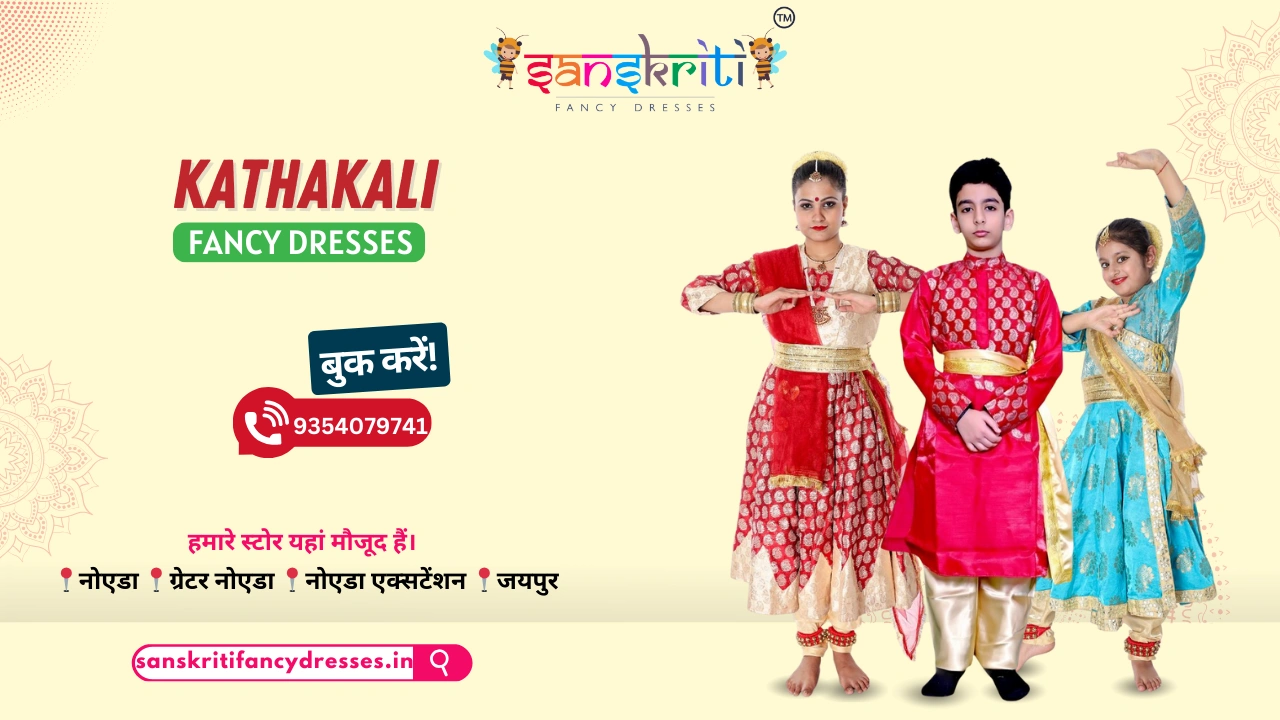
Kathakali fancy dress costume is one of the most eye-catching and traditional costumes from Kerala. Known for its bright face makeup, tall headgear, and colorful clothing, Kathakali represents stories from Indian epics like the Ramayana and Mahabharata. This costume is often chosen for school cultural programs, fancy dress competitions, and classical theme events because it looks royal and visually powerful on stage.
Kathakali costumes are special because every color, design, and makeup style has a meaning. The green face represents good characters, while red and black shades are used for powerful or negative roles. Along with the costume, the makeup and headgear play a big part in creating the complete Kathakali look.
This article describes Kathakali costumes, necessary materials and accessories as well as makeup suggestions and general ideas for school’s performances. Parents and teachers can create a traditional and stunning Kathakali costume yet do so in a manner that is comfortable and easy to wear by children.
What is Kathakali?
Kathakali is a classical Indian dance style from Kerala. This vibrant form of art contains a visual presentation that tells a story through movement, dance, gesture and facial expression as opposed to using words to communicate through spoken means.
Dancers performing this dance form wear bright coloured costumes that include elaborate headdresses and intricate face paintings that depict characters such as kings, deities, demons and heroes taken from Indian epics such as the Ramayana and Mahabharata.
The various colours that are used in Kathakali facial decoration all have specific meanings associated with them.
- A bright green colour represents the good characters.
- Red, black, or both mean the character is a powerful or evil one.
- Yellow is used to depict calmness/holiness.
In essence Kathakali is more than just a dance; it is almost a live theatrical performance of a story being acted out and told through accompanying music, acting and beautiful costumes, and serves as an educational tool for children to learn about Indian Culture, Tradition and History in an enjoyable, visual way.
Important Components Of Kathakali Fancy Dress Costume
| Component of Costume | Description | Function |
|---|---|---|
| Kireedam (Headgear) | Tall, embellished crown decorated with beads, mirrors, and colors | Designates rank and marks character |
| Skirt and Blouse | Multi-layered skirts of red, white, or green with an embroidered blouse | Enhances royal presence on stage |
| Uduthukettu (Waist Belt) | Wide, decorated belt with embroidery and embellishments | Adds richness and secures the costume |
| Ornaments and Jewelry | Necklaces, earrings, bangles, and armlets | Adds royal design and authenticity |
| Chutti (Face Frame) | White frame around the face made with rice paste or cloth | Highlights facial expressions |
| Anklets (Chilanka) | Bells worn around the ankles | Adds rhythm to dance movements |
| Props | Sword, shield, bow, or fan | Enhances stage action and drama |
Key Features of Kathakali Costume and Makeup
Kathakali is famous for its rich costumes and detailed makeup. Every part of the costume and makeup has a special role in showing the character. These features help the audience understand whether the dancer is playing a god, hero, or demon. Here are the main features:
1. Bright and Heavy Costume
- Kathakali dancers wear large, colorful skirts with many layers. These skirts are made to look royal and dramatic on stage. The costume also includes a padded jacket and wide waist belts.
2. Tall Headgear (Kireedam)
- The headgear is big, decorated, and shiny. It shows the importance and power of the character being played.
3. Face Makeup and Their Meanings
- The colours and techniques used in creating the face make-up were derived from Mother Nature.
- Green is the colour of the noble or good character; Red/Black was used to symbolize a wicked or evil character or a character with great power. Yellow is representative of a gentle, spiritual character.
4. White Chutti: The Jaw Frame
- The jaw frame or Chutti of Kathakali make-up is very distinctive feature – it is a white frame made from a mixture of rice flour and paper, which gives a dramatic effect for the play’s character.
5. Eye and Nose Design
- Boldly painted black and red eye make-up has also been used to produce clarity in facial expression from afar; in addition, the nose and forehead designs can represent mood.
6. Heavy Ornaments/Jewels
- Kathakali costumes are adorned with large necklaces, chest ornaments, armlets and waist ornaments. These are usually of metal or imitation metal; however, many have developed their own unique styles when appearing in the role of Kathakali dancer.
7. Bright Colours/Patterns
- Because all of the colours used in this art form are bold and contrasting, they allow the character to appear very clear, strong and attractive when viewed from the audience in a performance.
Types of Kathakali Characters and Their Costume Styles
In Kathakali, every aspect of the costume and face makeup indicated a character’s role. The styles of these costumes and makeup made it easier for audiences to know if a character was good, evil, calm, or powerful. Each type of character has distinct color and design schemes for the costumes, headgear, and jewelry. Below are the main types of Kathakali characters:
1. Pacha (Green Face) – These are Noble Characters
The characters represent kind, courageous, and virtuous individuals. For example: Lord Rama, Lord Krishna, Arjuna
Costume Style:
- A bright green face representing nobility.
- A simple design for the lips consisting of red.
- A large golden crown.
- Elegant, royal costumes.
- A far less detailed face pattern design than the other types.
2. Kathi (Green with Red Marks) – These are Proud or Evil Kings
These characters represent powerful individuals with flaws such as pride or anger. For example: Ravana, Kichaka
Costume Style:
- A green-colored face with red markings located on the cheeks and nose.
- An exaggerated white chutti.
- An extremely large crown and bold ornaments.
- A far more dramatic and fierce appearance than Pacha costumes .
3. Chuvanna Thaadi (Red Beard) – These are Evil Characters
These characters represent angry demons or ferocious villains. For example: Baka, Kalanemi
Costume Style:
- A red beard and red makeup.
- Black and red face patterns.
- A very large headdress and extravagant costume.
- An extremely fierce and terrifying appearance.
4. Karutha Thaadi (Black Beard) – Forest Dwellers or Hunters
Karutha Thaadi Characters, or forest inhabitants, are often portrayed as aggressive beings. The best example of this type is Kirata, who is considered to be Lord Shiva in hunter form.
Costumes Style:
- Black Beard, with dark makeup featuring bold facial designs.
- The costume is straightforward yet striking.
5. Minukku – Gentle and Female Characters
Minukku, or softer female characters, represent softer, more graceful characters like Sita, Parvati, and Shabari.
Costumes Style:
- Minukku is light pastel in colour, either yellow or orange. They typically wear lighter makeup, smaller crowns of headpieces, and have graceful, flowing designs.
6. Teppu: Special Characters
Special, divine or supernatural characters like Hanuman and Garuda.
Costumes Style:
- They feature special design features and colours on the face, and unique styles of headdresses and body structures. Some may wear masks and additional heavy ornaments.
Kathakali Costume for School Competitions
A Kathakali costume used during school performances represents Indian culture through traditional art, providing an exciting opportunity for children to represent this vast culture on stage. Although full Kathakali costumes have many layers to them, thus making them heavier and requiring lots of intricate detailing, a simplified version should be created for use in school competition settings, making the experience easier for performers.
1. Select a Simple Character
The characters selected for school competitions are usually much simpler than those found in a traditional Kathakali performance, allowing students to present characters that are fairly easy to portray such as:
- Krishna (Pacha) or
- Rama (Pacha) or
- Sita ( Minukku)
These characters will usually require less elaborate make-up, as such the children will be able to manage them better.
2. Use Lightweight Costume Materials
The ideal Mayo-Katapali Costume should include only lightweight material, such as:
- Cardboard or foam to create headgear
- Lightweight fabric such as cotton or satin (to make skirts and blouses)
- Thermocol or plastic has been used to represent jewellery instead of real or metallic gold.
By creating Lightweight Costumes, performers will be able to perform with comfort as well as to promote safety for performers from potential injury.
3. Use Simple Make-Up
Avoid using harsh chemicals; use nontoxic or child-safe products, such as children’s face paints in basic three primary colours (i.e., Green, Red, & White) for face painting and designs. Rather than using heavy Chutti, lightweight Chalk or Paper forms can be used in their place.
4. Use Simple Headgear/Ornaments
Heavy crowns, silver and gold garments (noted above), and other jewellery items should typically be simple alternatives like cardboard or foam crowns, lightweight artificial necklaces (beaded strings), and paper or plastic bangles.
5. Focus on Comfort and Safety
Make sure:
- The child can breathe, see, and move properly
- No sharp wires or pins are used
- The costume is easy to walk and sit in
6. Stage Performance Tip
Along with the dress, let children practice:
- Small hand movements
- Eye expressions
- Basic Kathakali poses
This makes their performance more impactful even with a simple costume.
Frequently Asked Questions
Q. What is a Kathakali fancy dress costume?
A. A Kathakali fancy dress costume is inspired by the traditional Kathakali dance of Kerala. It includes colourful clothes, special face makeup, and a big headgear.
Q. Is Kathakali costume suitable for school competitions?
A. It is very popular in school cultural programs and fancy dress competitions because it looks grand and represents Indian heritage.
Q. What materials are used to make a school-friendly Kathakali costume?
A. For school events, lightweight materials like cardboard, foam, chart paper, cotton cloth, and artificial jewellery are used.
Q. Is Kathakali makeup safe for kids?
A. For children, only non-toxic, skin-safe face paints should be used. Avoid using strong chemicals or traditional heavy makeup.
Q. Which Kathakali character is easiest for children to portray?
A. Characters like Lord Krishna, Lord Rama, or Sita are easier as they use simpler makeup and light costumes.
Q. How heavy is a real Kathakali costume?
A. Real Kathakali costumes are very heavy and complex, but for school competitions, simplified and lightweight versions are used.
Q. What accessories are important in a Kathakali costume?
A. Key accessories include a crown (kireedam), chutti, chest ornaments, waist belt, and facial makeup.

 Start Chat